
Platform
An interaction measured in buffer may behave differently in a biological sample or after another protein is introduced. To investigate those differences, Pavonis uses VICA™ to compare binding, specificity and kinetics in selected solid-phase and solution-phase assays. The resulting measurements help researchers select candidates for further characterization and identify conditions that need closer investigation.
How it works
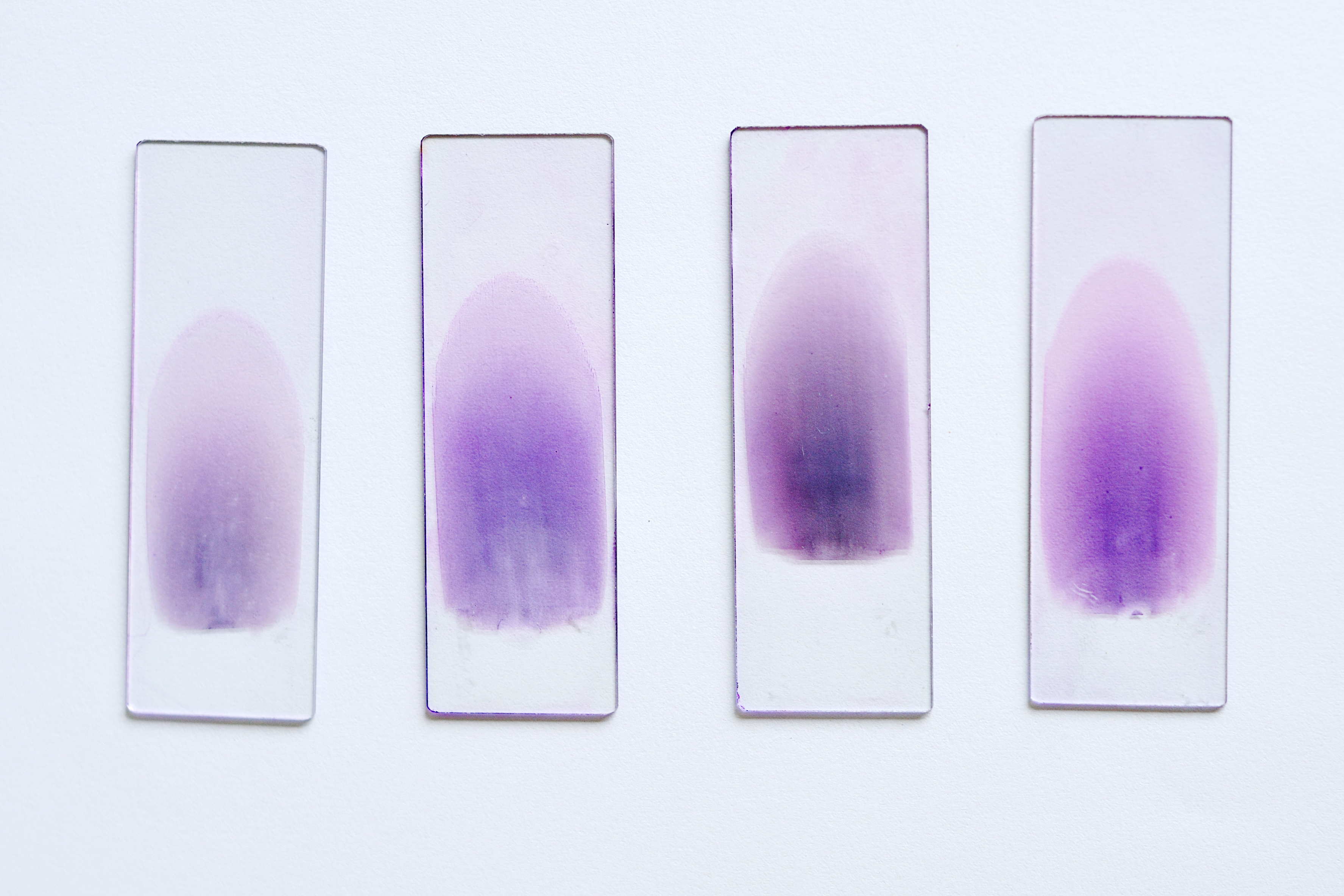
When binding changes VICA™’s colour-active anodized-aluminum surface, thin-film interference produces a change in the colour of reflected light. The VICA™ Lightbox supports observation of that response by eye or camera. Together with the slide and assay, this reader forms the VICA™ platform.
Reports binding through a change in reflected colour
Makes selected interactions observable at the surface
Supports observation of the optical response by eye or camera
Provides a compact reader for laboratory and selected field assays
Determines how the target and samples interact before the response is measured
Allows selected solid-phase, solution-phase and sequential binding studies
For solid-phase studies, a target is immobilized on the surface for direct binding or a capture-and-detection assay. Selected solution-phase formats allow molecules to bind and form a complex in solution before the interaction is reported at the surface.
Pavonis selects a supported format for the target, samples and interaction being studied.
Binding produces an optical signal at the surface. Sequential additions allow successive binding steps to be followed within a suitable assay.
Measurements are interpreted in the context of the study’s controls and experimental conditions to identify differences in binding.
Shared surface
VICA™ can accommodate multiple experiments on one slide. In suitable assays, researchers can reuse the slide with different reagents or add proteins sequentially to follow successive interactions.
Running comparisons on the same surface supports consistent, direct analysis of how different molecules and conditions influence binding. Pavonis defines the appropriate comparisons, controls and reuse conditions for each study.
Measurements
Because the assay format and samples determine which measurements are available, Pavonis confirms the outputs before the study begins.
ShowsDifferences in binding under the tested conditions
UseSelect candidates for further characterization
ShowsHow binding differs across selected targets or conditions
UseInvestigate cross-binding, competition or effects of the sample matrix
ShowsThe rate of complex formation
UseCompare association kinetics
ShowsThe rate of complex dissociation
UseCompare dissociation kinetics
ShowsEquilibrium binding strength
UseCompare affinity under the tested conditions
The data below are anonymized examples that illustrate the readouts and assay formats in a typical VICA™ experiment.
Sample conditions
A comparison between buffer and another medium can reveal how sample conditions affect binding. VICA™ studies can examine selected interactions in media such as serum, urine and water, using small sample volumes. Before extending an assay to another matrix, Pavonis assesses preparation, background signal and controls, along with the volume and analysis required.
As a manually operated platform, VICA™ is suited to selected interaction studies rather than automated thousand-compound screening. Specialist low-picomolar affinity measurements are also outside its current capabilities, and the platform is for research use, not clinical diagnosis.
Laboratory and field
VICA™’s compact reader allows researchers to observe the optical response at the colour-active surface, so selected binding assays can be taken into the field. Researchers can measure samples where they are collected, avoiding the need to transport them back to a laboratory for that analysis. Pavonis develops the assay and operating requirements around the target, sample and research setting.
Published research
To examine how VICA™ has been used, explore the protein and peptide research published in npj Biosensing, Nature Communications and Molecular Pharmaceutics. Each paper describes the experimental conditions behind its results, allowing you to assess the relevance to your own work.
With a description of the interaction and samples available, our team can discuss suitable VICA™ formats and measurements for your study.